
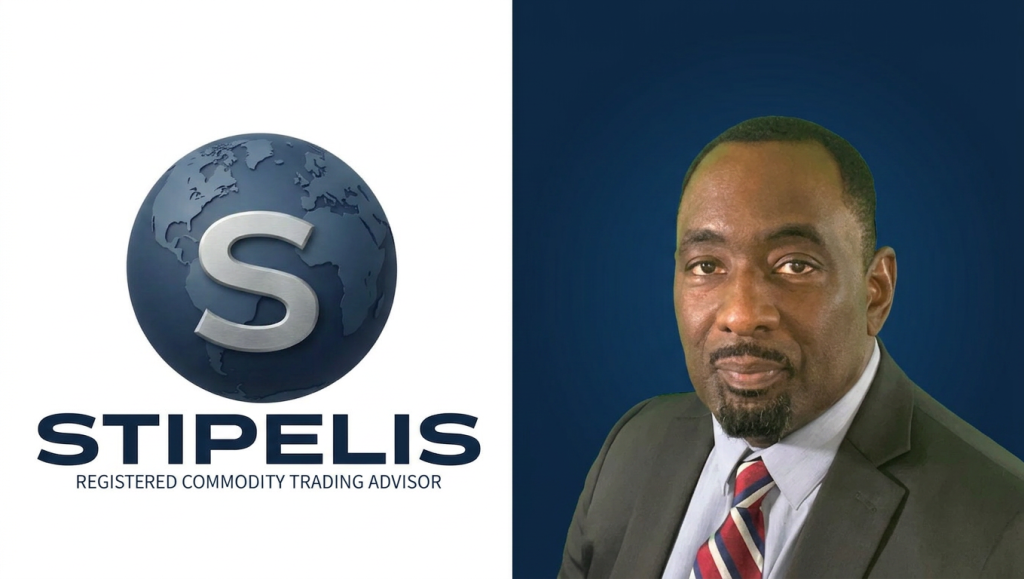
About Stipelis Global Trading
Thirty Years. One Belief.
Stipelis Global Trading was built on a simple belief:
Investment decisions should be driven by research, discipline, and risk management—not by the need to sell products.
That belief was not formed overnight. It was shaped by decades of experience, setbacks, lessons learned, and a lifelong effort to understand how markets truly work.
I didn’t start out trying to build a company.
I started out trying to understand markets.
Like many people entering the financial industry, I didn’t begin at the top. My first experience was at a penny stock firm. It didn’t take long for me to realize it wasn’t the kind of business I wanted to be part of, so I left almost immediately.
After that, I spent months cold calling at Shearson Lehman Brothers, where I learned one of the earliest and most valuable lessons of my career: how to handle rejection. Hearing “no” over and over again taught me discipline, persistence, and the importance of continuing to do the work even when results are not immediate.
My Wall Street career then continued at a firm that would go through several mergers and name changes over the years. The name on the door changed, but I remained focused on learning the business and understanding how financial markets function. During that time, I gained experience in research, portfolio construction, market analysis, risk management, and client service.
I also witnessed something that left a lasting impression on me.
I learned that there can be a difference between what is best for investors and what is being sold to investors.
That realization reinforced a principle that continues to guide me today: investment decisions should be based on evidence, research, and risk management rather than marketing campaigns, sales quotas, or the investment fad of the moment.
As my career progressed, I became increasingly fascinated by commodities and futures markets.
The more I studied them, the more I realized that commodities are far more than mere investments. They are windows into the global economy.
Take copper, for example. Copper is used in homes, factories, automobiles, power grids, data centers, and countless industrial applications. When demand for copper rises, it often reflects expanding economic activity. When demand weakens, it can be an early signal that growth is slowing. By watching a single commodity, you can often learn a great deal about what is happening throughout the world economy.
The same is true for crude oil. Every day, crude oil helps power transportation networks, manufacturing facilities, airlines, shipping fleets, and modern economies around the globe. Changes in oil prices can influence inflation, consumer spending, corporate profits, and even government policy. Understanding oil means understanding one of the most important economic inputs on the planet.
That fascinated me.
Commodity markets sit at the intersection of economics, politics, weather, supply chains, demographics, monetary policy, and human behavior. Every market tells a story. The challenge is learning how to interpret it.
The deeper I studied these markets, the more I realized that commodities offered a unique lens through which to understand the global economy.
I was also attracted to the liquidity of futures markets.
Unlike many investments that require long holding periods or may be difficult to enter and exit efficiently, liquid futures markets can provide opportunities across a wide range of time horizons. Whether analyzing short-term market movements or longer-term trends, liquidity allows market participants to respond to changing conditions while maintaining a disciplined focus on risk management.
For someone who was passionate about studying markets, that flexibility was incredibly appealing.
That fascination eventually led me to proprietary trading firms, where I learned some of the most important lessons of my career.
I learned how to enter and exit positions.
I learned how to manage risk.
I learned both the power and the dangers of leverage.
Most importantly, I learned that markets are one of the great equalizers. They do not care who you are, where you work, or what title you hold. At the end of the day, markets care only about whether your analysis is correct and whether your risk management is sound.
Those years sharpened my understanding of risk, position management, and emotional discipline.
But the journey was not always smooth.
There were periods when nothing was certain.
There was a year without a job.
There were years spent trading my own account with no firm’s name behind me.
There were several years working nights answering calls for hospitals, clinics, and crisis lines. It was not part of the plan, and it was not where I expected to be. But it paid the bills, provided health insurance, and gave me the opportunity to continue pursuing a goal that still existed only in my mind.
Many people see a business after it has been built.
Few see the years spent trying to build it.
That unseen period is where Stipelis Global Trading was born.
The road took longer than I expected. It involved setbacks, detours, uncertainty, and more than a few occasions when the easier option would have been to walk away.
I didn’t.
While others saw only the result, I spent years studying markets, building databases, compiling historical data, developing analytical frameworks, and refining my understanding of commodities and risk management. The work was often slow and rarely glamorous, but it reinforced a lesson that markets teach repeatedly: success is usually the product of patience, consistency, and discipline.
Eventually, that work led to the creation of Stipelis Global Trading.
Today, the firm is registered with the Commodity Futures Trading Commission (CFTC) and is a Member of the National Futures Association (NFA).
I share this story not because the resume is impressive.
Resumes only tell part of the story.
The most important parts are usually hidden between the lines: the setbacks, uncertainty, failures, night shifts, false starts, disappointments, and the determination to continue moving forward when success is anything but guaranteed.
Careers are rarely straight lines.
Mine certainly wasn’t.
What matters is whether you continue showing up for the same belief year after year, even when nobody is watching.
That belief helped build this firm.
Stipelis Global Trading exists because I never stopped trying to understand markets, never stopped believing in research and discipline, and never stopped moving toward the goal of building an independent firm dedicated to putting clients first.
And that is the story behind Stipelis Global Trading.
Related Reading: